Buying Your First Set of Golf Clubs in Kenya
What to buy and what to skip when you buy your first set of golf clubs in Kenya — written by the people behind the counter, including where not to spend.
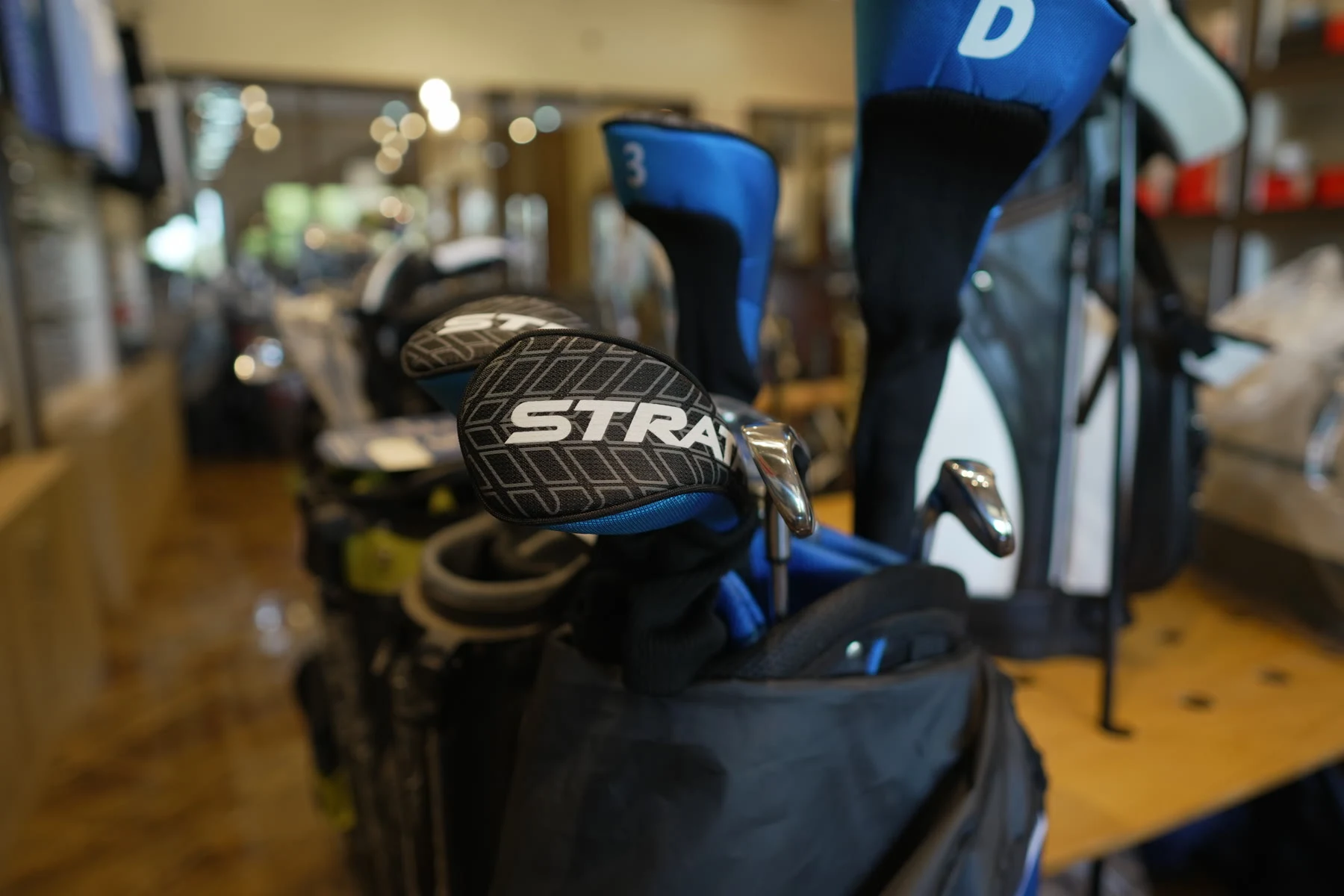
Someone asks us this in the shop most days, usually after a first lesson, and usually having already read six contradictory things on the internet. Here is what we actually tell them.
Buy a complete set, not individual clubs
You will read that you should start with a 7-iron, a wedge and a putter and add clubs as you improve. It is common advice and we think it is wrong for most people, for one practical reason: a half set makes every round an exercise in not having the right club. That is not a useful way to learn, and it is not fun, and people who are not having fun stop playing.
A complete set — driver, a fairway wood, a hybrid, irons, a wedge and a putter — costs less than premium irons alone. The Callaway Strata set is the one we hand to most beginners.
How to split what you have
We are not going to quote you figures — prices move, and the right number depends entirely on whether you are buying new or second hand. What does not change is the order of priority.
If your budget is tight, spend it in roughly this order:
- A complete set. Every club you need, in one go.
- Shoes that fit. Non-negotiable, and explained below.
- A bag you can actually carry, or a trolley if you would rather push.
- A glove, tees and a dozen cheap balls.
Everything after that is optional for at least a season. Come in and tell us what you have to spend and we will tell you honestly where the line falls — including when the answer is to buy second hand and keep the difference.
Where the money is worth spending
Shoes. You will walk somewhere between eight and eleven kilometres a round. Bad shoes ruin that, and every golfer who has tried playing eighteen in running shoes on wet grass has learned this once.
A trolley. Carrying fourteen clubs for four hours costs most beginners two or three shots over the closing holes through fatigue alone. A push trolley fixes that, and costs a fraction of what golfers usually spend trying to fix it with a new driver instead.
Grip size. Free to get right at the point of purchase, and expensive to ignore afterwards. Wrap your hand around the grip: your fingertips should just touch the pad of your thumb. Touching well past it means the grip is too thin, and a gap means it is too thick.
Where it is not
The driver. It is the club beginners obsess over and the one they hit worst. The driver in a complete set is fine for two seasons.
The ball. Play the cheapest two-piece ball you can find until you stop losing them. Read our note on balls if you want the longer reasoning.
Anything described as “tour”. Tour equipment is built for swings that repeat. Yours does not repeat yet, and that is not an insult — it does not repeat for the great majority of people who own tour irons either.
The one thing to do before you buy
Take the clubs and hold them. Sole the 7-iron on the floor the way you would at address. If the toe points up in the air, the lie angle is wrong for you, and buying that set means every good swing you make will still push the ball left.
Thirty seconds at a counter prevents two years of confusion. Come in and we will do it with you, whether or not you buy the set from us.